
Front Range slab leveling, explained
Colorado Mudjacking and Concrete Leveling Guide
A sunken driveway, a tipped patio, a sidewalk edge that catches toes. Learn how mudjacking, foam lifting and replacement compare, why Colorado slabs drop in the first place, and what to ask before anyone drills a hole.
Drill. Pump. Seal. Keep water out.
Most sunken slabs can be lifted, not replaced
Concrete rarely sinks because the concrete failed. It sinks because the soil underneath moved, washed away or was never packed tight to begin with. The slab itself is often still sound: one piece, the right thickness, just sitting lower than it should.
That is the case for lifting. A crew drills a pattern of small holes, pumps material into the gap below, and raises the slab back toward its neighbours. Mudjacking uses a heavy cement slurry. Polyurethane foam lifting, often called polyjacking, uses a two-part foam that expands under the slab.
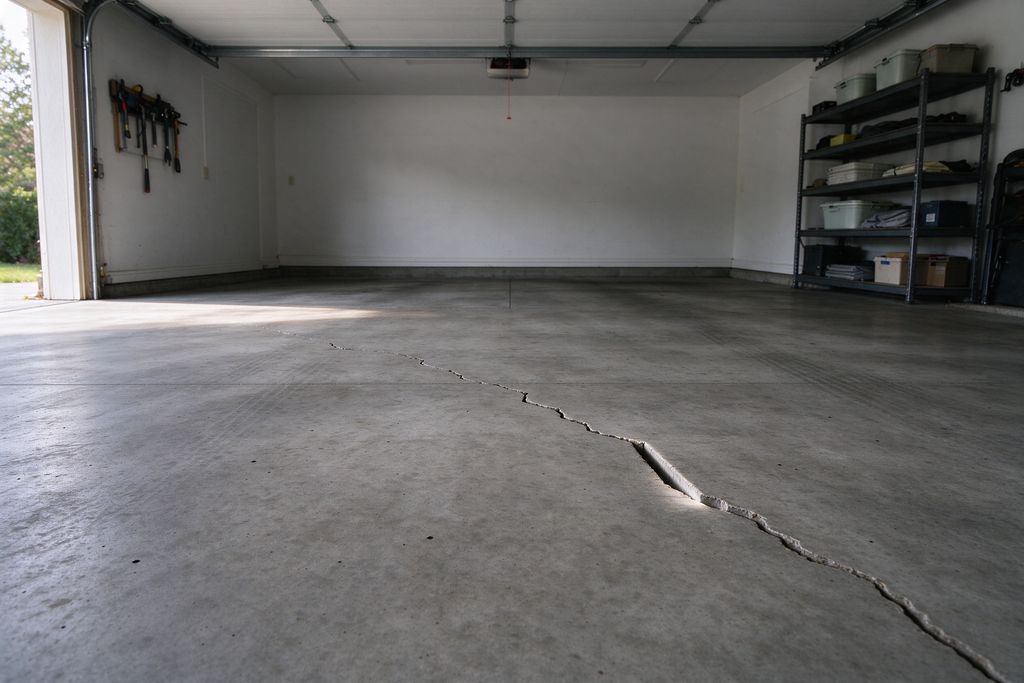
Lifting is not always the answer. A slab cracked into loose pieces, crumbling at the surface, or pushed up by swelling clay needs a different plan. This guide walks through how to tell the difference.
The second half of the job matters as much as the lift: sealing the joints and steering roof water away, so the soil under the slab stops changing. Skip that and the same panel is often back down within a few seasons.
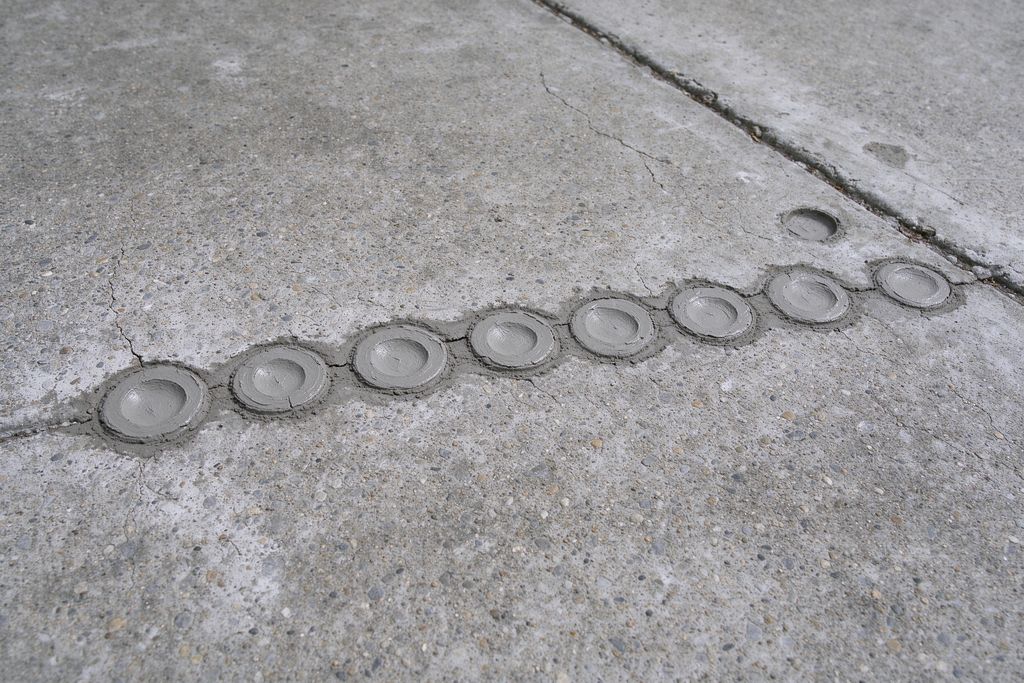
How a slab lift works: drill a pattern of small ports, pump slurry or foam beneath, seal the joints so water stays out.
Holes go where the void is and where the slab needs to rise. Mudjacking holes are larger, commonly around an inch and a half to two inches. Foam ports are much smaller.
Material fills the void first, then starts to raise the slab. A good operator lifts in small steps and watches a level or string line so the panel does not overshoot or crack.
Holes get patched, then the joints get backer rod and flexible sealant. That last step is the one most often skipped, and the one that decides whether the lift lasts.
Three ways to fix it
Mudjacking, foam or new concrete
Each method fits a different slab. Flip through them, then read the full mudjacking vs polyjacking comparison with a decision tool.
All three start from the same diagnosis: the soil under the slab stopped holding it. The difference is whether you put support back under the old concrete or start again with new concrete, and that choice comes down to the shape the slab is in.
Cement slurry, pumped under pressure
The older, heavier method. A mix of soil or sand, cement and water fills voids with solid material and raises the slab. Well suited to intact driveways, walks and patios with a moderate drop.
- Holes
- Larger, about 1.5 to 2 inches
- Weight
- Heavy; adds load to soft soil
- Cure
- Usually a day or more before cars
- Best for
- Intact slabs, big voids, no rush
Expanding foam, injected through small ports
A two-part polyurethane that expands as it reacts. It weighs a small fraction of slurry, which helps on soft or saturated soil, near pools and close to foundations. Material usually costs more than slurry.
- Holes
- Small, often around 5/8 inch
- Weight
- Light; little added load
- Cure
- Fast; traffic often the same day
- Best for
- Pool decks, near foundations, tight timing
Tear out, fix the base, pour again
The right call when the slab is broken into loose pieces, crumbling, or heaved upward. It is the most disruptive option and usually the most expensive, but it is the only one that fixes bad concrete.
- Disruption
- Demolition, forming, haul-off
- Base
- Chance to fix compaction and grade
- Cure
- Typically about a week before cars
- Best for
- Broken, spalled or heaved slabs
Why Front Range concrete sinks
Five forces do most of the damage between Fort Collins and Pueblo. Usually two or three work together. The full guide to why concrete sinks has a symptom checker.
- 01
Clay Swell.
Bentonite-rich clays along the Front Range swell when wet and shrink when dry, so slabs ride up and down with the seasons.
- 02
Washout.
A downspout or sprinkler aimed at a joint carries fine soil out from under the slab, one storm at a time.
- 03
Loose Fill.
Soil pushed back against a new foundation settles for years. Patios and stoops built on it tilt toward the house.
- 04
Frost Heave.
Water in open joints freezes, expands and pries the joint wider each winter, then lets more water in each spring.
- 05
Roof Water.
A roof sheds a lot of water onto a small strip of ground. Where it lands is usually where the slab drops first.

What can be lifted
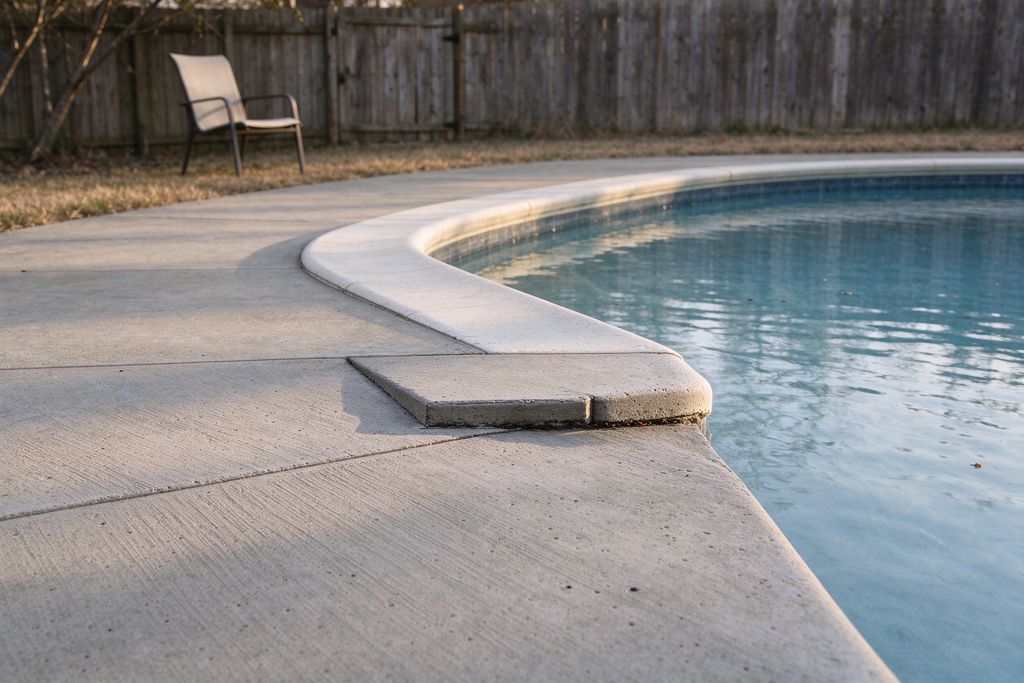
Almost any flat slab that is still in one piece. Each surface has its own catch. See the Colorado driveway and patio leveling guide for the details.
-
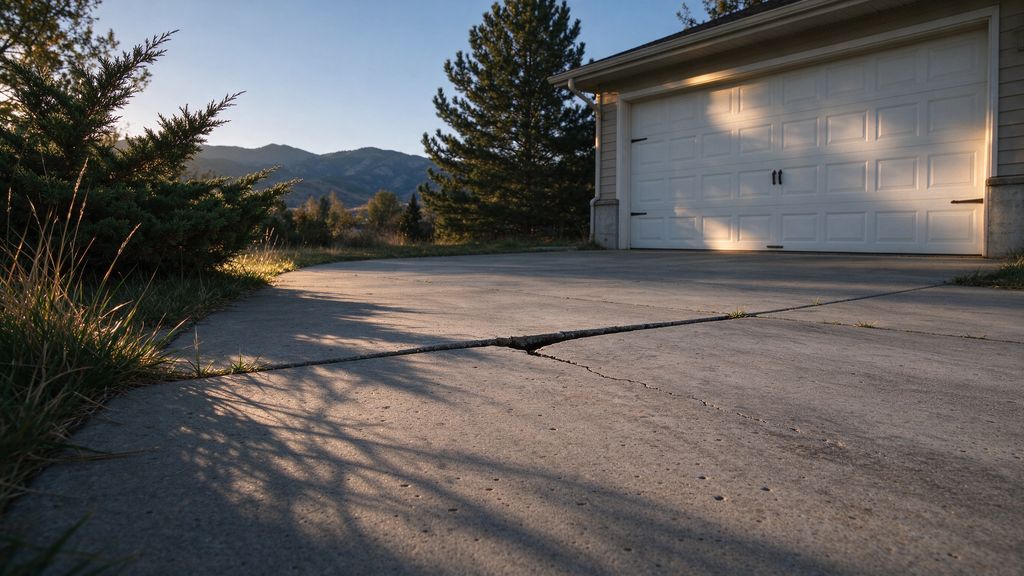
The most common lift. Watch the panel at the garage apron and the one at the street: both sit over disturbed soil. Lifting a driveway panel also restores drainage away from the garage.
-
Public walks, private walks and entry paths. A lifted panel removes a trip edge without leaving a ramp, which grinding alone can. Public sidewalks may need city approval, so check with your city first.
-
Patios next to the house often tilt toward the foundation, steering water to exactly the wrong place. Lifting them back to a slight slope away from the house matters more than looks.
-
Floating garage slabs and aprons can be lifted when the void is under the slab. Interior jobs need care around floor drains, utility lines and anything stored on the floor.
-
Foam is common here because of light weight and small ports. The crew needs to know where plumbing runs and should keep material away from skimmers and return lines.
-
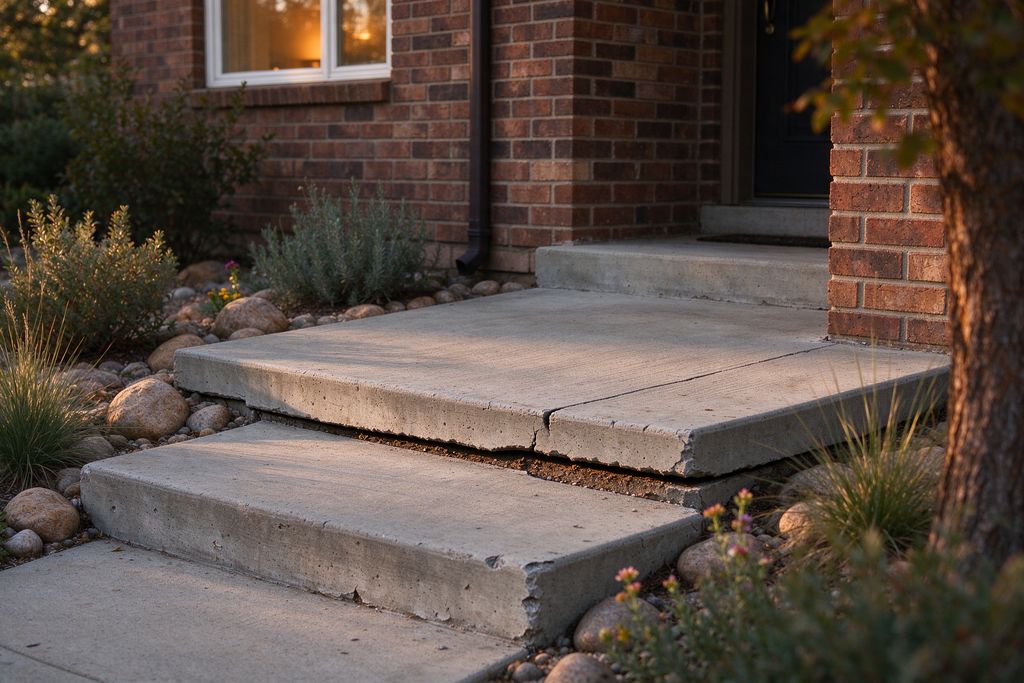
Front stoops that pulled away from the house are a classic over-dig problem. Many can be lifted; some are hollow or tied to the foundation, so get them inspected first.
Sidewalk trip hazards
Half an inch is where most problems start
Accessibility guidance allows a change in level up to 1/4 inch, wants a bevel up to 1/2 inch, and treats anything taller as a hazard. Many Colorado cities make the adjacent owner responsible for the sidewalk in front of a property, and some run repair or cost-share programs. Rules differ by city, so check with your city before you hire anyone.
Read the trip hazard guide
Sheet 04 / Before you hire
Four checks before anyone drills
Bids for slab lifting can look alike on paper. These four checks separate them. Hover or tap a cell. The full guide to choosing a concrete leveling contractor has the complete question list.
01 / Licensing
Licensed where you live
Colorado handles most contractor licensing at the city and county level, not statewide. Ask which local license the crew holds and whether your job needs a permit, especially for public sidewalks and driveway approaches.
02 / Insurance
Insurance on paper
Ask for a certificate of general liability insurance, and workers' compensation if they have employees. A lift that cracks a slab or a line underneath is exactly what that coverage is for.
03 / Written scope
A scope you can measure
Which panels, how much lift, how many holes, what material, how the holes get patched, and what happens if a slab cracks during the lift. Vague bids are hard to compare and harder to hold anyone to.

04 / Water plan
A plan for the water
Ask what they will do about the joints and the downspout that caused this. A crew that lifts and leaves without talking about water is selling you the same job again later.
Quick answers
Is mudjacking the same as slabjacking or concrete lifting?
Yes. Mudjacking, slabjacking, concrete lifting and concrete leveling all describe raising a sunken slab by pumping material underneath it. The material is either a cement slurry (mudjacking) or an expanding polyurethane foam (often called polyjacking or foam jacking).
Can a lifted slab sink again?
It can, if the reason it sank is still there. Water running under the slab, open joints and soft fill keep working. Sealing joints and moving roof water away from the slab are what keep a lift level.
Does mudjacking fix a cracked slab?
Lifting can close the height difference across a crack, but it does not glue the concrete back together. A slab broken into several loose pieces is usually a replacement job.
Is this website a concrete contractor?
No. Mudjacking Colorado is an independent information site. It does not perform concrete, foundation or structural work. Hire a properly licensed and insured contractor and check your city's permit rules.
Tell us what sank, and where
Describe the slab, the drop and your city. The request comes to the people behind this guide, and we reply by email.
Request an estimate Independent information site, not a contractor. Hire a licensed, insured contractor and check your city's rules.